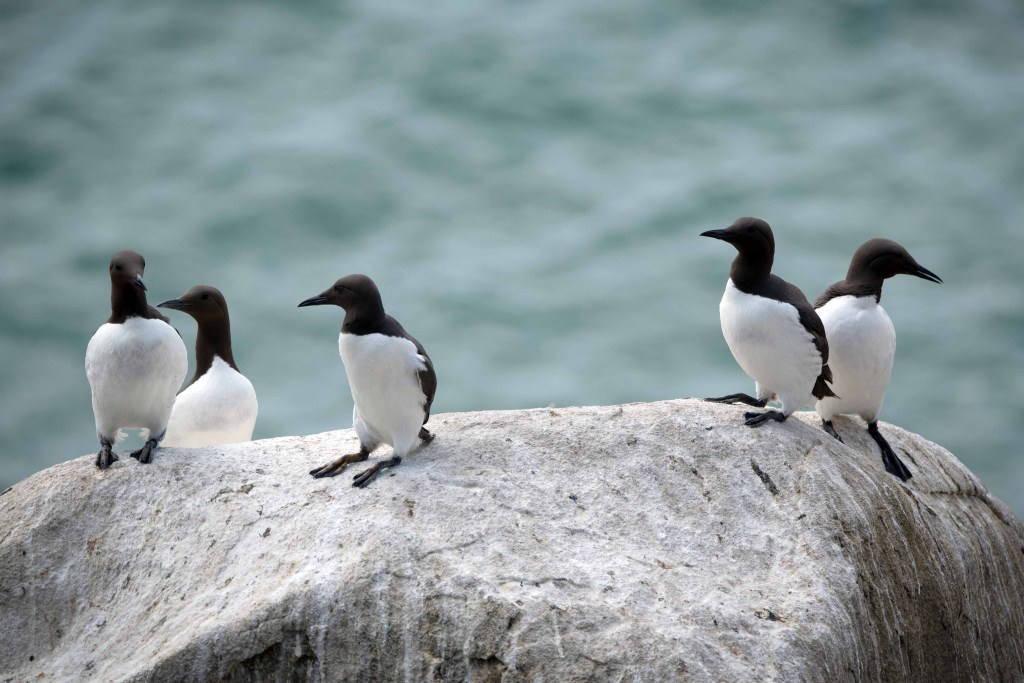
Recently, I took a day trip to the Great Saltee Island. Located five kilometres off Kilmore Quay in Wexford, it is a haven for wildlife photographers due to the abundance of seabirds such as Puffins, Gannets, and Guillemots, to name but a few. Many of these seabirds visit the Saltee Islands during the Summer to breed and nest.
Access to the island is via ferry, and a transfer to a dinghy, as the water becomes shallower. At the time of booking I was advised to wear appropriate footwear, as I would get wet exiting the dinghy. I opted to just go barefoot, and carry my hiking shoes until I walked onto the sand.
As quite a bit of walking was planned I had decided forgo my trusty monopod. In my bag, I brought just one lens, one camera, plus spare batteries and memory cards. I also packed an essential lunch as there is no food or drinks available on the island.
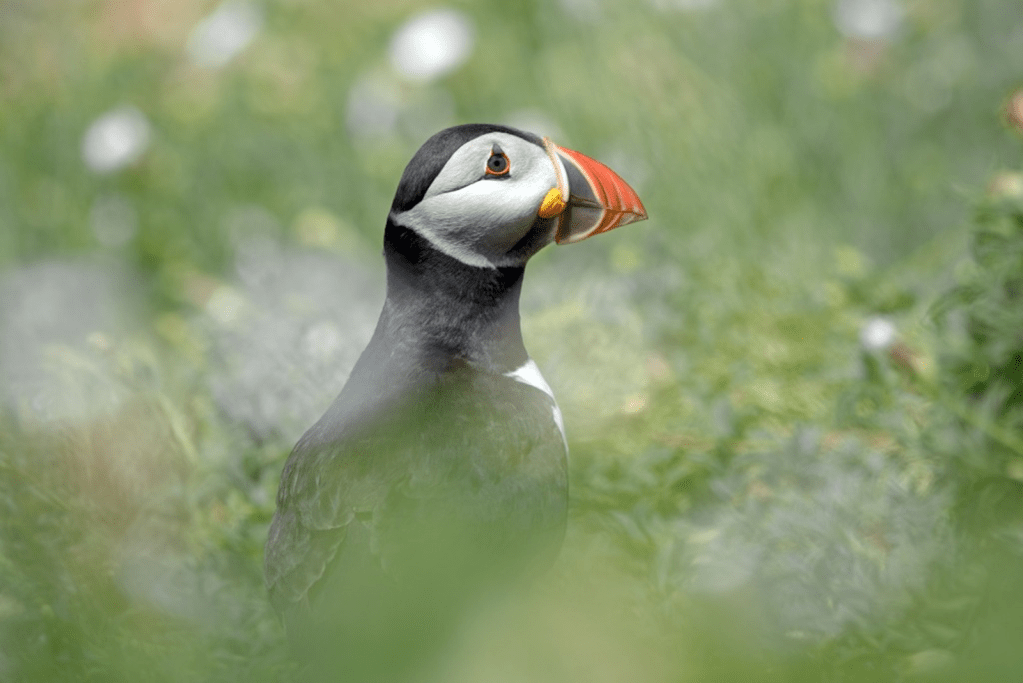
I immediately sensed a feeling of calm as I trekked up from the beach onto the grassland beyond. The fresh sea air, blue skies and barrenness of the land all added to its magical atmosphere. I was soon greeted by perhaps the islands most famous visitor – the Atlantic Puffin, as they fly in with their catch – a mouthful of sandeels to feed to their chicks. I was surprised at their placid behaviour as they waddled past my feet, en route to their nesting burrows.
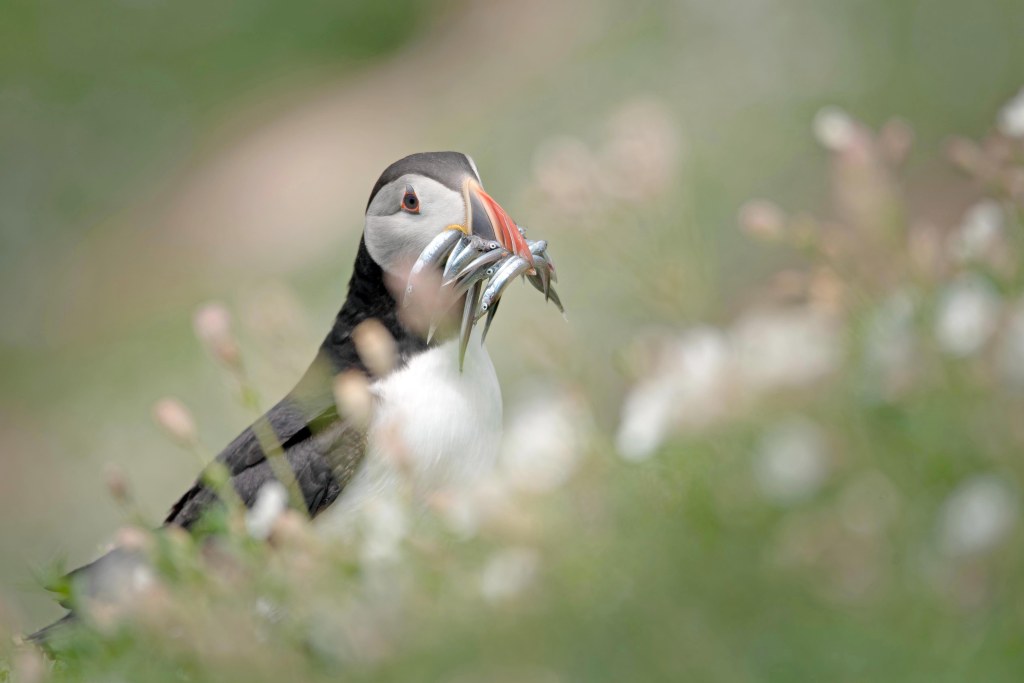
I soon got into the flow of photographing the Puffins. Although the harsh sunlight was far from ideal, I did my best to avoid any blown highlights by underexposing, checking my histogram, all the while waiting for momentary cloud cover.
Of course, caution must be exercised at all times. It can be all too easy to become preoccupied with getting that shot you envisage without paying heed to your surroundings. I witnessed a persons full rucksack tumble off the cliff, hitting the rocks below – a stark reminder of the potential dangers!
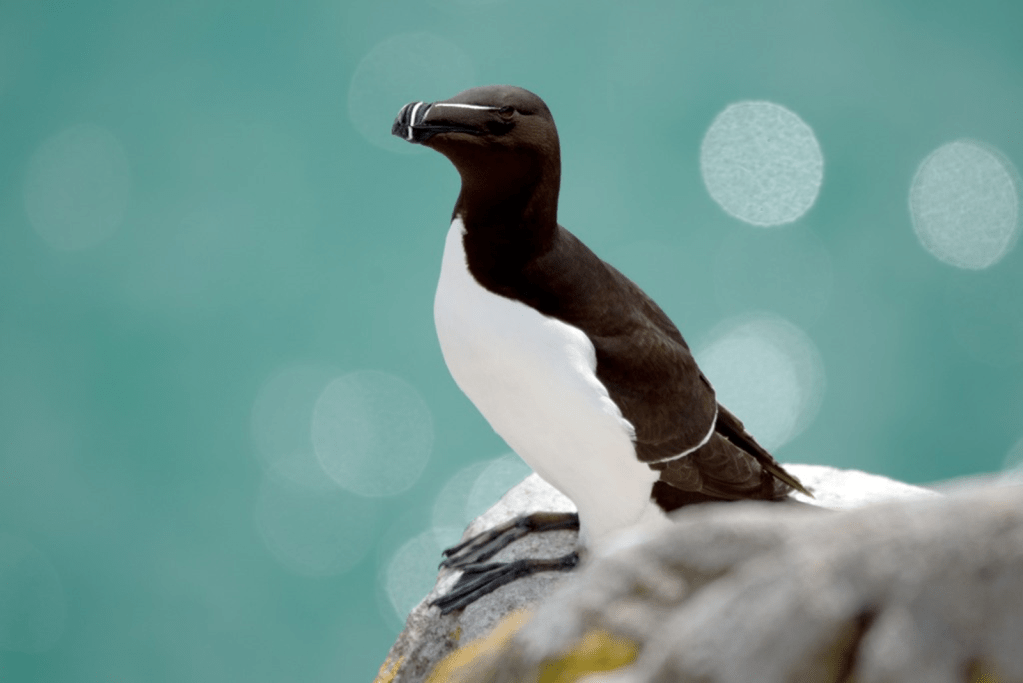
However, there are well trodden foot trails, which I kept to. Another reason for keeping to these trails of course is for the benefit of the birds. Puffins make their nesting burrows on the grass amongst these trails, as well as the cliff faces with the other seabirds. A misplaced footstep could easily cause damage to the burrow and its chick. Another observation I made was in regard to the Great Black Backed Gull. They too were nesting, but can be quite aggressive when approached, so keeping a safe distance is advised!
I was hoping to get more images of Gannets. Unbeknownst to me at the time, there was a second colony closer to the shore, further up the island. This, coupled with the hope of more favourable lighting conditions, has urged me to plan another trip before the end of this Summer. Overall, It was a fantastic experience and one that I would definitely recommend to anyone interested in wildlife photography, birds, or simply immersing themselves in nature for a few hours.
 Barry Duggan Photography